 Shop for Golf Putters
After doing all the hard work of getting from tee to green, the last thing you want to do is needlessly throw any shots away. Given the delicacy, touch and feel that putting requires, being able to select the club which best suits your game could really help take strokes off your round. However, get it wrong and you could be left cursing your failure to sink those tricky four-footers.
Around 50 percent of your shots on a golf course will be made with the putter, and it is for this reason that technology is advancing the performance of these clubs. Whatever you are after, here at GolfOnline we stock a wide range of golf putters from the biggest manufacturers in the game, including Odyssey, Scotty Cameron
, Bettinardi, Cleveland, TaylorMade and Wilson.
Face and Toe-Balanced Putters
One of the first things to choose between is whether you want a face or toe-balanced putter.
Face-balanced putters are ideal for golfers who have a stroke which goes back and through, as the centre of gravity is directly below the axis of the shaft. This enables the club stroke to straighten on the forward motion.
On the other hand, a toe-balanced putter might suit those with an out to in stroke, as the centre of gravity is not found below the axis of the shaft.
You can tell these two clubs apart by balancing the shaft on your finger, with the face facing upwards for a face-balanced putter, and the toe pointing to the ground for a toe-balanced putter.
Putter Shafts
Putter shafts are usually made of steel so you can get the maximum touch and feel while on the green.
You could choose between a heel-shafted, centre-shafted or offset putter depending on your preference for using the head or hosel to guide the ball into the hole.
Shaft length is another important decision to make when choosing your putter. Traditional lengths, which range between 32 and 36 inches, but other custom options are also available.
Putter Head Design
The design of your putter head has much to do with your stroke and it is important to get it right when making your decision.
Blade putters bring back images of yesteryear and are the most traditional type of putter, ideal for both the beginner and the experienced golfer.
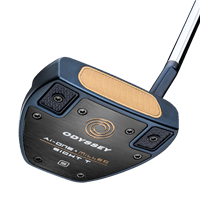
Mallet putters are heavier and are blessed with a lower and deeper centre of gravity, which should reduce backspin when you putt. While weighted golf putters suit those players who have an in to out stroke.
Faces and Inserts
The final part of the putting jigsaw is selecting what type of face or insert you require. This will all depend on the type of ball that you are using, along with the speed of the greens you are playing on. For example, you will probably want a different putter for October in the UK than you would for Portugal in July.
It is all about trying to find a club with the right feel for your style and surroundings, therefore testing out whether you want a metal, insert or groove-faced putter will go a long way in helping your quest to be king or queen of the greens.
Still need some help picking your next golf putter? Why not book in for a custom fit appointment with GolfOnline? We'll walk you through the entire process and help you choose the perfect golf putter for your game.